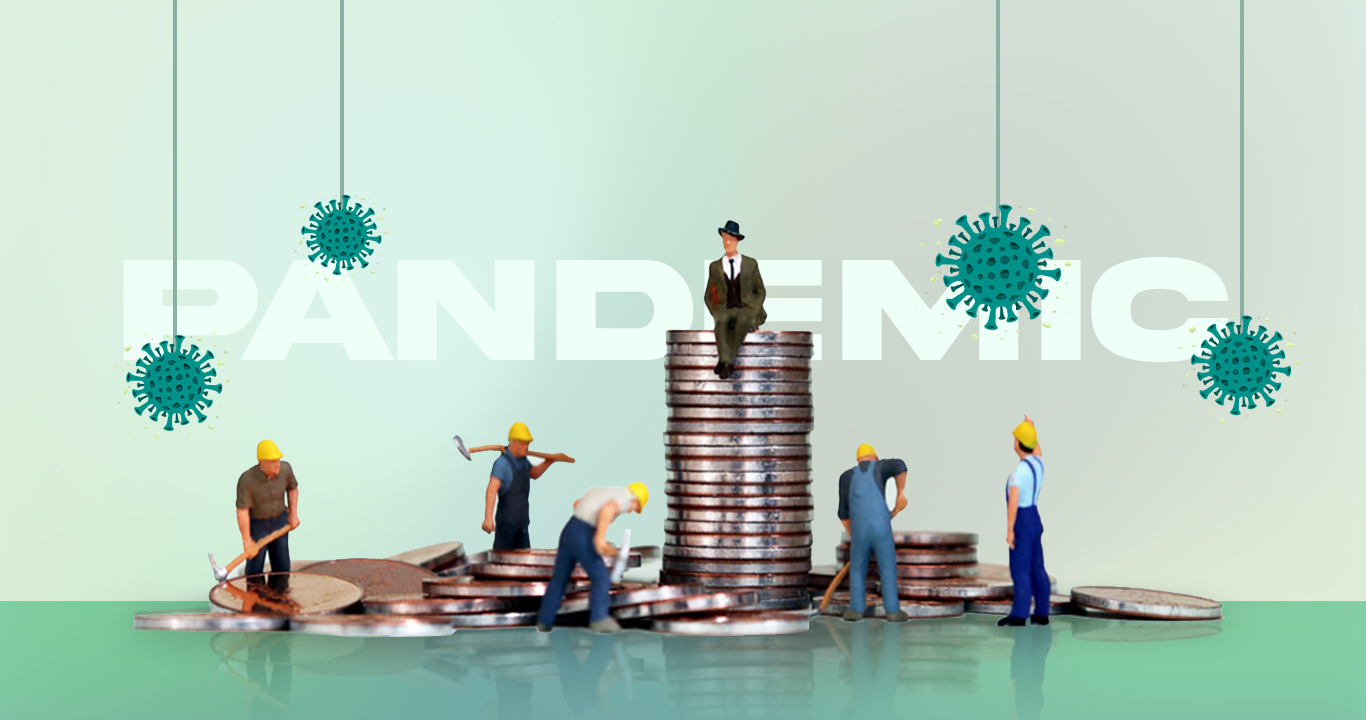
The Covid-19 Pandemic
The ongoing global pandemic of coronavirus disease 2019 (COVID-19) has been linked to more than 199 million confirmed cases and 4.23 million confirmed fatalities as of 3 August 2021, making it one of the deadliest pandemics in history. It is caused by severe acute respiratory syndrome coronavirus 2 (SARS-CoV-2). In December 2019, the unique virus was discovered in Wuhan, China; a lockdown in Wuhan and other areas in Hubei province failed to prevent the outbreak, and it spread to other regions of mainland China and the rest of the world. On January 30, 2020, the World Health Organization (WHO) declared the outbreak a Public Health Emergency of International Concern, and on March 11, 2020, it was declared a pandemic. Strains of the virus have caused new waves in numerous countries since 2021, with the Delta, Alpha, and Beta variants being the most dangerous.
How the pandemic has changed the world economy
With the coronavirus pandemic reaching almost every country in the world, its spread has left national economies and businesses reckoning the costs, as governments seek to implement new lockdown measures to combat the virus's spread. Despite the development of new vaccines, many people are still unsure how recovery will proceed. The impact of the pandemic on the world economy is summarized below:
Global share prices are fluctuating
Large fluctuations in stock markets, where firms' shares are purchased and sold, can have a significant impact on the value of pensions and individual savings accounts. In the early months of the crisis, as the number of Covid-19 cases mounted, major financial markets around the world suffered massive drops. Following the introduction of the first vaccine in November, the major Asian and US stock markets have rebounded, but the FTSE remains in negative territory. In 2020, the FTSE fell 14.3 %, its lowest level since 2008.[1] As a result, many countries' central banks, including the UK's, have lowered interest rates. Although several markets recovered ground in January 2021, this is a common occurrence known as the "January effect". Analysts are concerned that more lockdowns and delays in vaccination programs could result in increased market volatility this year.
A terrible time for job seekers
Many people have lost their jobs or had their salaries reduced. The unemployment rate has risen in all major economies. As parts of the economy have come to a halt, millions of people have been placed on government-sponsored employment retention programs. In many countries, the quantity of new job prospects is still quite low. Some experts have warned that it could take years for employment levels to restore to pre-pandemic levels.
Majority of countries in a state of recession
According to the IMF, the world economy collapsed by 4.4% in 2020. The drop, according to the organization, is the worst since the Great Depression of the 1930s. China was the only major economy to rise in 2020. It had a 2.3% growth rate. The IMF, however, forecasts global growth of 5.2% in 2021. This will be fueled mostly by countries like India and China, which are expected to grow at 8.8% and 8.2%, respectively.[1]
Travel still far from taking off
Airlines have reduced flights and passengers have canceled business trips and vacations, wreaking havoc on the travel industry. Many countries have imposed stricter travel restrictions as a result of new virus strains detected recently. In 2020, the number of flights worldwide plummeted, and it is still a long way from recovery.
Hospitality sector has closed its doors worldwide
Millions of jobs have been lost in the hospitality industry, and many businesses have gone bankrupt. Over 35 million hotel and rental listings around the world have seen a drop in reservations in all of the leading tourist locations. In 2020, billions of dollars were lost, and while the outlook for 2021 is better, many analysts anticipate that international travel and tourism would not return to pre-pandemic levels until about 2025.
Increase in online shopping
Shoppers stayed at home, causing retail footfall to plummet to new lows. New variants and an increase in cases have exacerbated the problem. Consumers are still apprehensive about returning to retail shops. The majority of shoppers are no longer ready to go more than 5 kilometers to shop. This shift in shopping behavior has boosted online retail tremendously, with a global sales of $3.9 trillion in 2020.[1]
Pharmaceutical companies are winning
Billions of dollars have been pledged by governments throughout the world to develop a Covid-19 vaccine and treatment options. Some pharmaceutical companies involved in vaccine development have seen their stock prices soar. Moderna, Novavax, and AstraZeneca have all seen considerable increases in their stock prices. A number of pharmaceutical companies have begun to provide dosages, and most governments have begun immunization campaigns.
The Growing Divide Between Rich and Poor Economies
COVID-19 has adversely affected poor and vulnerable countries, jeopardizing decades of hard-won progress and worsening inequality in the poorest countries. “We are all in this together,” has been one of the fundamental narratives of this pandemic, but the reverse is true. Results demonstrate that those who are most systematically disadvantaged have been hit the hardest across different countries and within most countries.
Macroeconomic Outlook of the Disparity
The world economy is on track to achieve its most powerful post-recession rebound in 80 years in 2021, a year and a half after the COVID-19 pandemic began. However, the recovery is projected to be unequal across countries, with large economies expected to rise strongly while many developing economies lag behind.
This year, global growth is predicted to increase to 5.6%, owing to the strength of major economies like the United States and China.[2] In 2021, the United States and China are anticipated to each contribute around a quarter of global growth. Massive fiscal assistance has supported the US economy, vaccination is projected to be widely available by mid-2021, and growth is expected to reach 6.8% this year, the fastest since 1984. China's economy is forecast to grow at a robust 8.5% this year then decelerate as the country's attention changes to minimizing financial stability threats. Despite this year's rebound, global GDP is predicted to be 3.2% lower in 2021 than pre-pandemic estimates, and per capita GDP in many emerging market and developing economies is expected to remain below pre-COVID-19 peaks for some time.[2]
Growth has been reduced lower to 2.9% in low-income economies, where immunization has lagged. With the exception of last year's decline, this would be the slowest pace of expansion in two decades. In 2022, the group's output is expected to be 4.9% lower than pre-pandemic estimates. The pandemic has wreaked havoc on fragile and conflict-affected low-income nations, delaying per capita income improvements by at least a decade.
Gap in per capita education spending
Two-thirds of low- and lower-middle-income countries have slashed their public education spending since the onset of the outbreak. Only one-third of upper-middle and high-income countries, on the other hand, have cut their expenditures. These cuts have been modest so far, but as the pandemic continues to take its toll on the economy and fiscal circumstances deteriorate, there is a risk that they will become more severe. These divergent patterns suggest that the already huge spending inequalities between low and high-income countries will spread much further. Prior to the COVID-19 outbreak, high-income countries spent an average of $8,501 per child or youth on education in 2018-19, compared to $48 in low-income countries.[3] COVID-19 is exacerbating the already significant per-capita education spending disparity between rich and poor countries.
Wider gap in achieving SDGs
The Covid-19 pandemic has slowed progress toward realising the Sustainable Development Goals (SDGs) and expanded the gap between rich and poor countries in terms of their ability to achieve sustainability goals like poverty eradication, gender equality, and a low-carbon economy.[4] The pandemic has hampered low-income countries' ability to "build back better”. Because of their lower market creditworthiness, poor countries lack the fiscal space to fund recovery plans that are compatible with the SDGs, whereas rich countries' governments have borrowed substantially. Rich countries will be able to recover from the pandemic faster and will be better able to sponsor stimulus programs that promote a green, inclusive recovery.
Vaccine Inequity: The Biggest Obstacle
Without immediate action to enhance supply and ensure equal access for all nations, COVID-19 vaccine inequity will have a long-term and substantial impact on socio economic recovery in low- and lower-middle-income countries. Rich countries have made relatively low progress toward ensuring an equitable global distribution of vaccines after monopolizing initial production. If low-income countries had similar vaccination rates as high-income countries, scaling up manufacturing and distributing adequate vaccine doses may have added $38 billion to their GDP projection for 2021.[5]
Less than 1% of the adult population has been vaccinated in Africa, which has the world's fastest-growing covid caseload, and South Africa, Rwanda, and Uganda have already reimposed restrictions. Covid fatalities are on the rise in Brazil, Argentina, and Colombia as Latin America is reeling. Again, in South Asia, India's population of roughly 1.4 billion people would not achieve herd immunity until October 2022.[6]
Richer countries are expected to vaccinate and recover from COVID-19 more quickly, whereas poorer countries are yet to properly vaccinate their health personnel and most at-risk populations, and may not achieve pre-COVID-19 levels of growth until 2024. Meanwhile, Delta and other mutants are causing several governments to reintroduce rigorous public health social policies. The social, economic, and health effects are getting worse, especially for the most disadvantaged and marginalized people.
The path to recovery
The world's main barrier to ending the pandemic and recovering from COVID-19 is vaccine disparity. Richer countries have already paid trillions in stimulus to prop up faltering economies. Now is the time to ensure vaccine doses are distributed swiftly, all obstacles to increasing vaccine production are removed, and financing support is secured, so vaccines can be distributed equitably and a genuine global economic recovery can occur. To assist poor countries in achieving their sustainability goals, improved revenue collection, backed by global tax reform, is required. Debt relief for emerging countries is also required in order for them to recover quickly.
References
- Coronavirus: How the pandemic has changed the world economy - BBC
- The Global Economy: on Track for Strong but Uneven Growth as COVID-19 Still Weighs - World Bank
- COVID-19: Two-thirds of poorer countries are cutting their education budgets at a time when they can least afford to - UNESCO
Pandemic has widened gap between rich and poor nations in meeting sustainable development goals - Eco-Business - Vaccine inequity undermining global economic recovery - World Health Organization
- Poor countries’ struggles amid vaccines shortfall threaten greater instability, migration and disease - The Washington Post