Previously, smartphones and mobiles were imported since Bangladesh was technologically and technically behind in this area. From 2014, by the partnership of the Telephone Shilpa Shangstha Ltd. (TSS) and OK Mobile, U.S.A, feature phones and smartphones started getting assembled in Bangladesh. In 2016, Walton started manufacturing smartphones in Bangladesh for the first time.
Observing the USD 1.2 billion market and the growth that succeeds, other national and international level smartphone and feature phone manufacturers like Samsung, Nokia, Xiaomi, Oppo, etc. entered the market by collaborating with local industries in carrying out local assembly of mobiles.
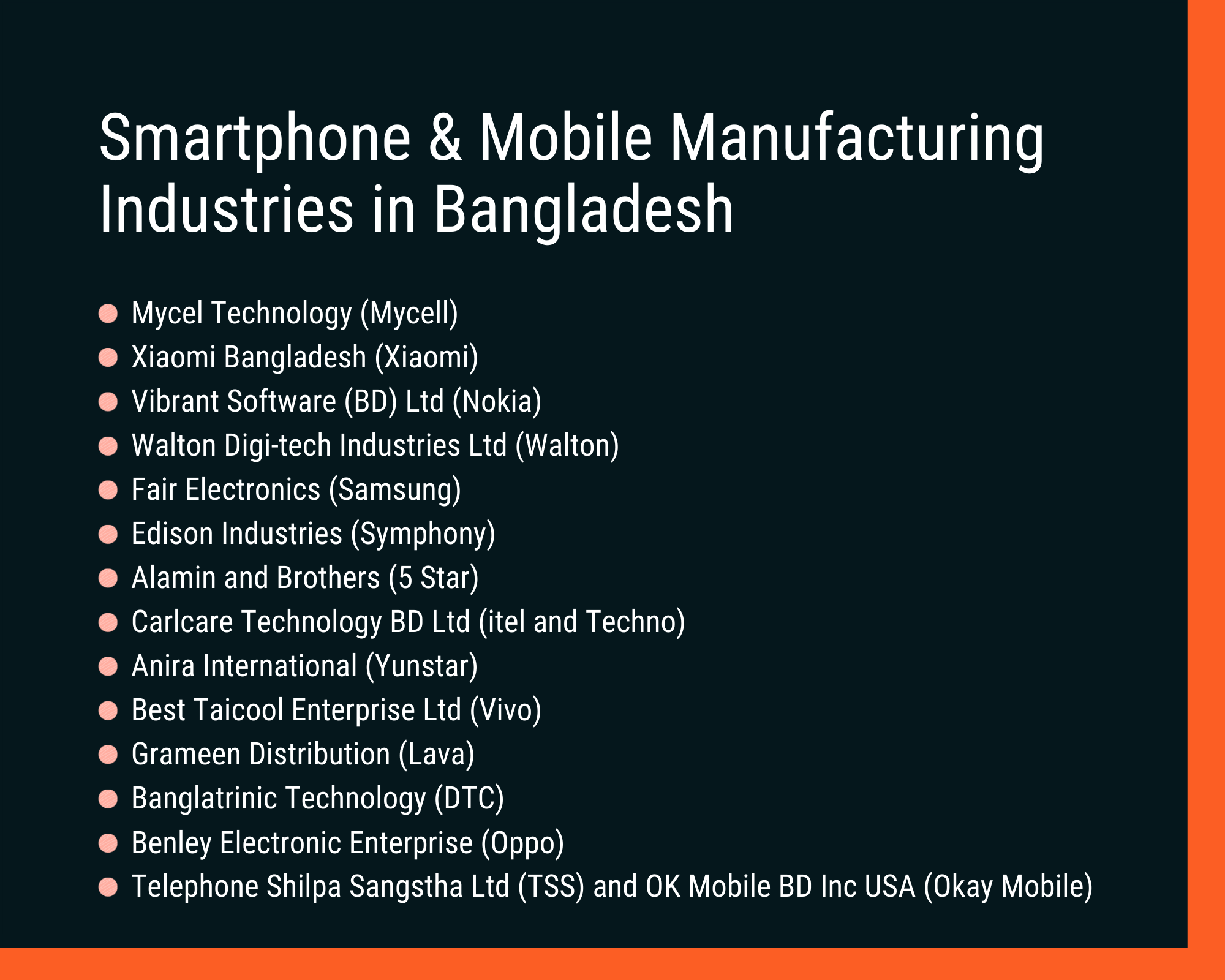
Currently, the following 14 industries are entitled to either manufacture or assemble mobile phones in Bangladesh:
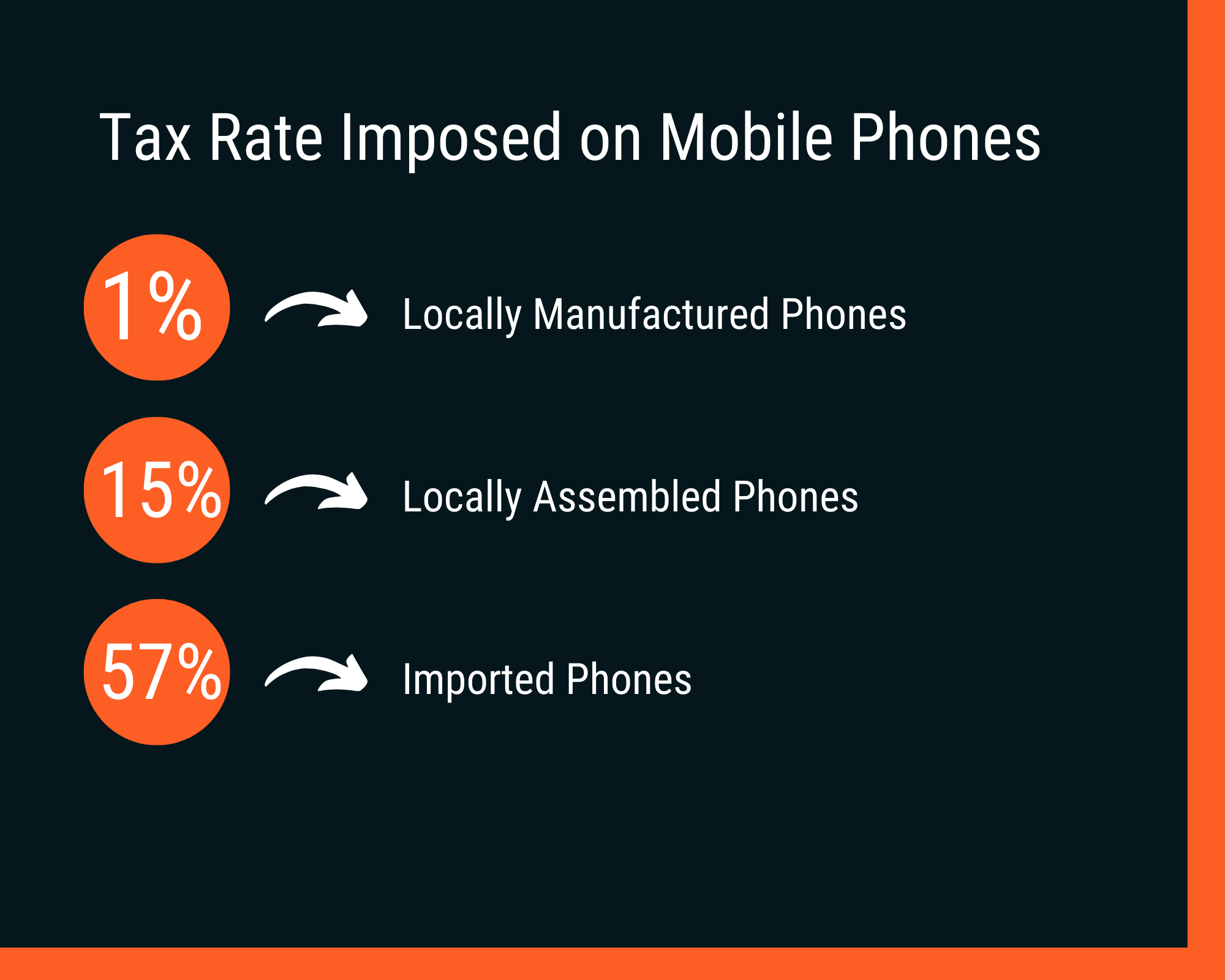
One of the main reasons why Bangladesh attracts smartphone companies to set up their assembly or manufacturing plants here is simply because of the tax benefits rendered by the Government of Bangladesh. Government of Bangladesh has assigned a tax rate of only 1% for locally manufactured mobiles, 15% for locally assembled ones and a staggering 57% for imported phones. These tax benefits ultimately create a 15-26% price gap between local and imported phones. Therefore, it is a no-brainer to simply consider establishing manufacturing or assembly plants in Bangladesh for these companies.
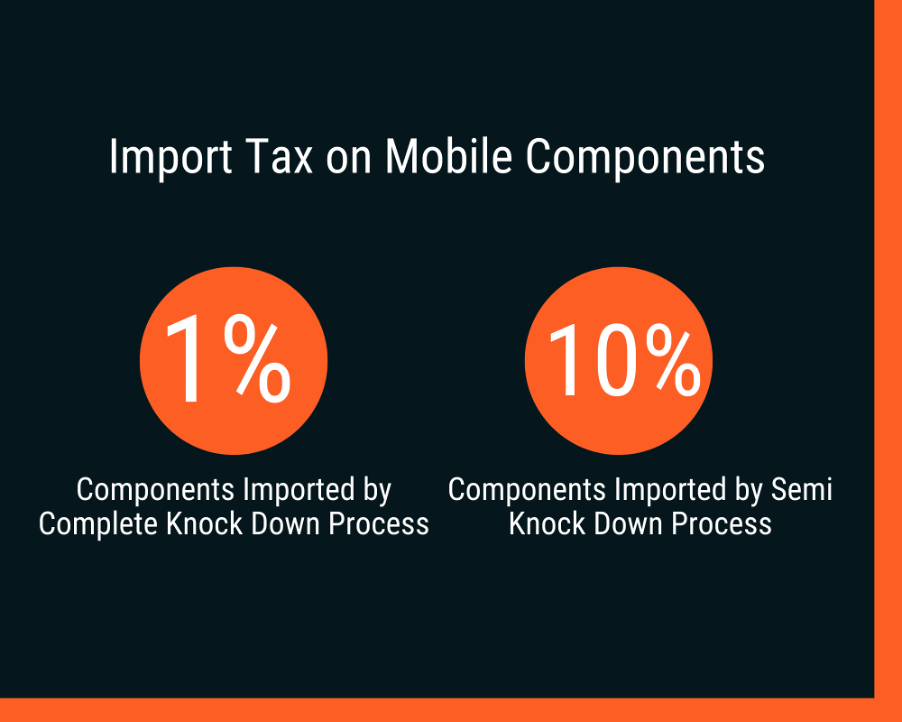
If a company assembles mobiles with components which are imported separately as different parts, import tax for those components will be at best 1%. When all of these imported components arrive as separate parts, it is called Complete Knock Down Process (CKD). On the contrary, if the company decides to import components which are partially assembled, 10% import tax will be levied from them. Strategically, the Government of Bangladesh is motivating companies to ensure full-fledged assembly and manufacture within the borders of Bangladesh.
Furthermore, Ministry of Commerce kick-started the ‘Made in Bangladesh’ program which is providing profitable opportunities for companies in the private sector to set up businesses in Bangladesh. All of these interesting tax benefits for locally produced smartphones and their components are motivating companies to make high value Foreign Direct Investments (FDI) in Bangladesh. Xiaomi set up its factory in Bangladesh by dint of this Made in Bangladesh initiative. Made in Bangladesh, in such a way, can direct FDI towards Bangladesh.
Bangladesh has strategically set up Hi-tech parks in 11 different zones. If the companies set up their assembly plants in these parks, they will receive exemptions from various taxes which are imposed by Bangladesh Hi-Tech Park Authority and Bangladesh Economic Zones. For the first 3 years of establishment, these companies will get a tax exemption of 100%. The tax exemption rate for the next years is mentioned below. These benefits are surely lucrative for the companies. Already 72% mobile devices in Bangladesh right now are locally produced, which is aspired to reach 80% in the upcoming year. Bangladesh-made mobile phones are now being exported to foreign countries. Symphony exported mobiles in Nepal from October 2021. Back in March 2020, Walton was the first manufacturer in Bangladesh to sell smartphones in the U.S.A.
Year | Exemption Rate |
1 | 100% |
2 | 100% |
3 | 100% |
4 | 80% |
5 | 70% |
6 | 60% |
7 | 50% |
8 | 40% |
9 | 30% |
10 | 20% |
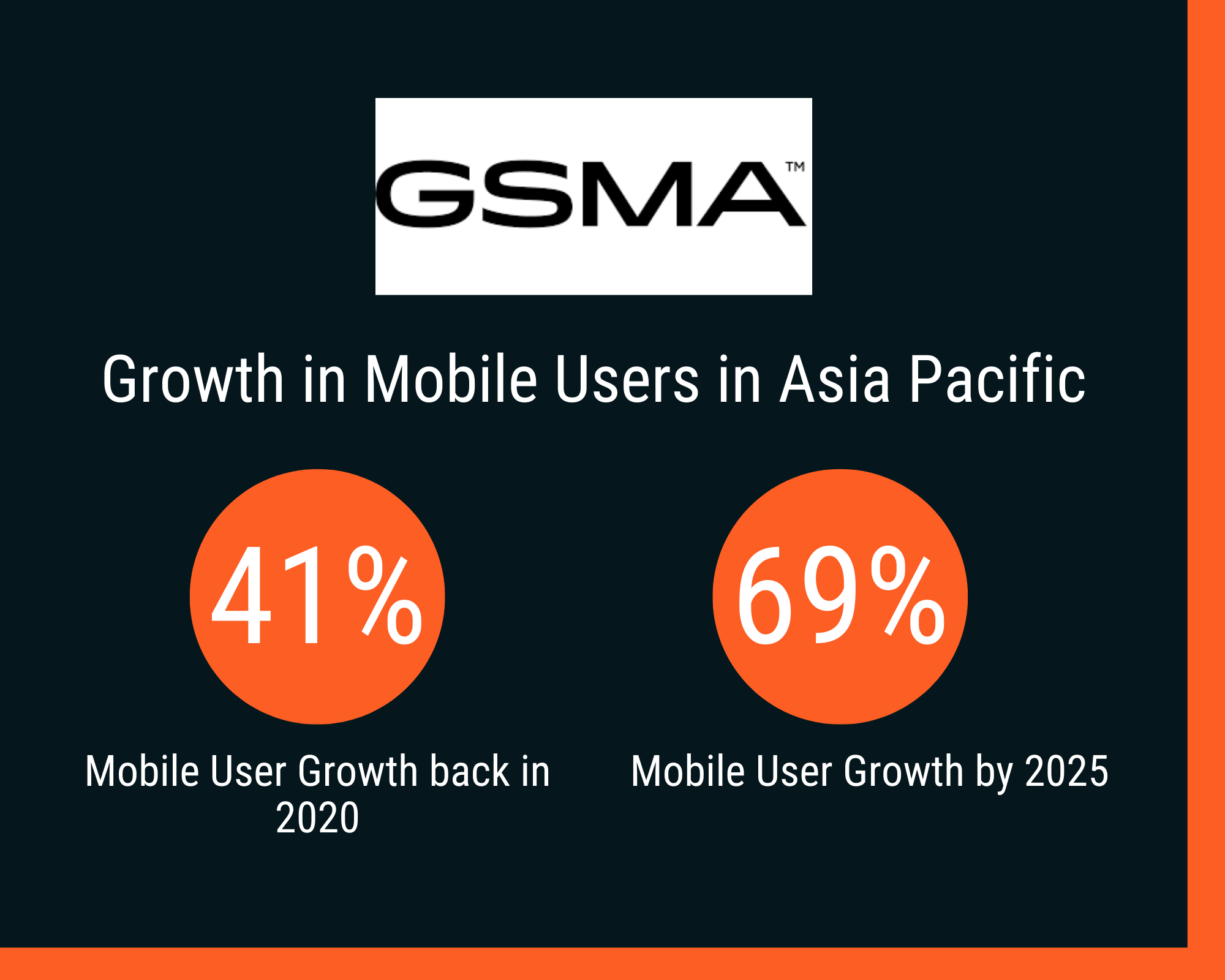
Predictions from GSMA’s Mobile Economy Report suggest that the smartphone demand for the Asia Pacific region is expected to spike up 41% to 69% by 2025. Bangladesh smartphone market has got tremendous potential and the market is highly competitive as well. The companies in the smartphone industry have to be dynamic, agile and innovative. Innovation must come from their products and their business processes as well. Threat of new entrants is clearly visible in the smartphone industry in Bangladesh simply because all of the providers are offering devices in different price ranges with more or less equal specifications, thus triggering a perfect competition. Considering the demographic of Bangladesh, majority of the people are inclined towards purchasing budget range devices. Majority of the smartphone users in Bangladesh are the youths and more or less tech-sound population. Hence, they do not bother looking up in the internet and take an educated decision on which phone they want to buy by comparing specifications and benefits of multiple devices available within the buyers’ intended price range.
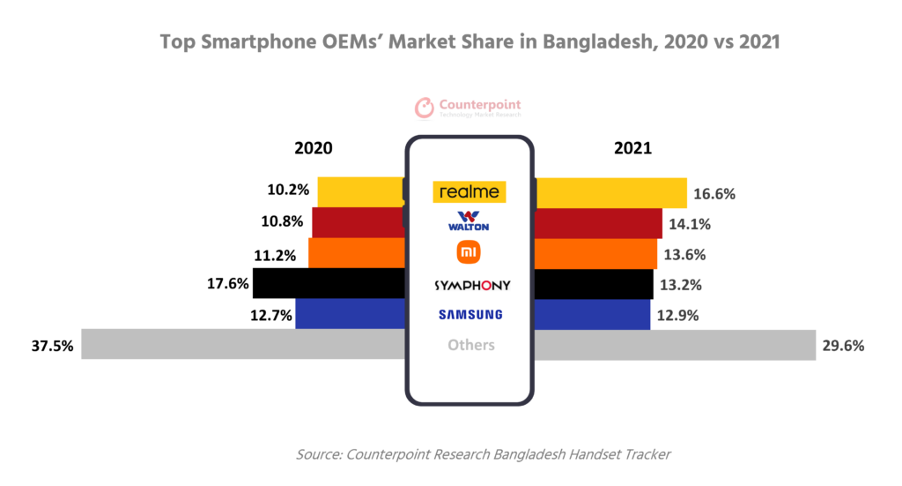
The interesting insight in this market, as mentioned, is the sudden advent of a new entrant to the market, which, through its innovative product, product placement and other business strategies, capture a significant market share within one or two years. Such a situation was created when Xiaomi first entered Bangladesh. It provided competitive products within a comparatively less price compared to Samsung and Nokia. Samsung then fought back by starting assembly in Bangladesh and offered a wide range of budget-range devices starting from 2018. Another example is the arrival of Realme. Its growth rate was 82% YoY. Walton and Xiaomi were also frontrunners in this case with growth rates of 43% and 35% respectively.
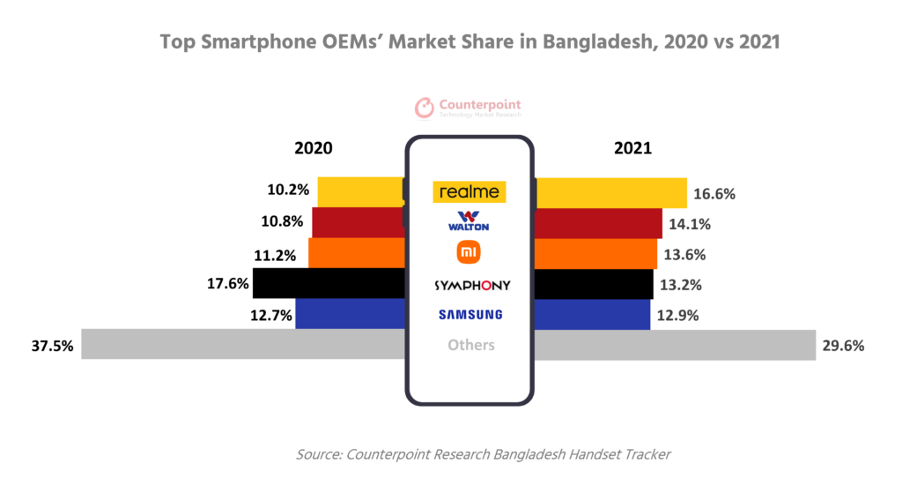
Due to less cost, locally manufactured mobiles such as Walton and Symphony have greater acceptability among lower middle income and lower income groups of the country. These companies, however, are trying their best to put up a convincing fight against the other companies in terms of budget range and high-end mobile phones.
Even if the smartphone industry is soaring, the network coverage that equips these mobiles and provides these devices with internet is average. The mobile phone operators are continuously promoting 5G networks. The network coverage across all regions of Bangladesh is not uniform and that ultimately creates customer dissatisfaction. Government of Bangladesh is strict and vibrant in taking steps to guide the mobile operators to provide quality mobile network all over the country.
Bangladesh is still import-dependent in terms of core components of smartphones and mobile devices such as chipset, camera, display panel, batteries, etc. Countries such as China, Taiwan, South Korea are sort of Silicon Valley for such components. And for the time being, until technological growth, maturity in the smartphone industry, skilled human resource is achieved, Bangladesh has to hold steady.
Another issue is the rampant growth of unofficial mobiles in the country. Illegally phones are entered inside the country and those phones are sold with less price. This highly imbalances the market.
Till now, the typical way of engaging customers in this industry is the use of showrooms. But COVID-19 pandemic has motivated companies and customers to use E-commerce platforms to purchase mobiles. Companies are also providing authentic phones to third-party ecommerce platforms to spur sales. Company-owned and third-party ecommerce sites are providing discounts to improve sales as well by collaborating with various Digital Payment providers in Bangladesh.
The smartphone industry in Bangladesh will continue to grow and companies will have to ensure quality for their products since the buyers in Bangladesh right now are informed customers who know what to buy.