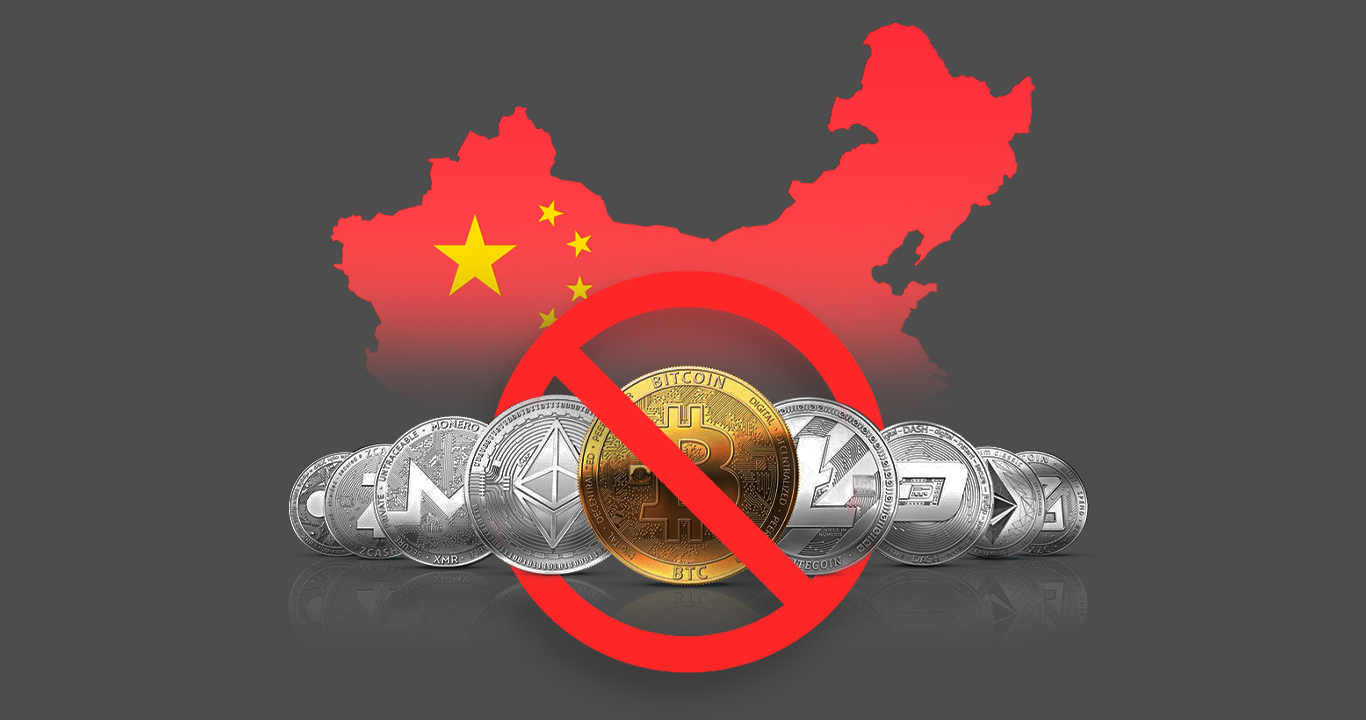
Bitcoin reached a peak of $59,770 in March of this year. Dogecoin and other cryptocurrencies also saw a sharp rise in prices. However, on the 18th of June this year, China, the world’s second largest economy, banned cryptocurrency mining, which wiped off nearly $ 400 Billion from the global crypto market. This move was followed by China’s 2017 ban on all local crypto trading exchanges.
China had always been a popular hub for cryptocurrency mining activity. Cheap computer equipment, large land masses, and cheap hydropower had always been attractive to the crypto mining industry. However, China and the CCP have always been interested in having control and cryptocurrencies, by their very nature, have always been a threat to their way of government. Coupled with a few other factors, it is clear why banning all crypto currency mining activity aligns with the Chinese way of doing things.
Control
China has always been keen on monitoring their citizens and understanding their day-to-day behavior. Monetary transactions have been a key source of information, except, it is impossible in the case of cryptocurrencies. Furthermore, Beijing maintains strict control over Yuan, the Chinese currency. This has historically allowed the central bank to devalue Yuan whenever they see fit. As a measure of control, an individual or a company cannot convert more than US$ 15,000 worth of Yuan in a given time without attaining permission from the regulatory bodies.
This gives the government agencies to exercise strict control over the money supply in the economy. An added benefit is the ability to hinder money laundering.
The Digital Yuan
To further its control and monitoring on financial transactions, The Chinese government has introduced the digital yuan. Unlike decentralized cryptocurrencies, however, this currency is issued and controlled by the central bank. On the other hand, it is much less volatile compared to crypto as the digital yuan is a mirror of the physical yuan. But there is a twist. The government can put an expiry date on the digital yuan. This could be done to stimulate the economy by increasing consumer spending. This could also be used to restrict individuals if the government sees fit. While the digital yuan is a competitor of the cryptocurrencies due to their common digital nature, it is also different in one key aspect. While most cryptocurrencies are not being used in day-to-day transactions and are more like an asset class, the digital yuan is being used as a substitute to the physical yuan in everyday transactions. This move is more damaging to mobile payment services such as WeChat Pay and Ant Financial than it is to cryptocurrencies directly. But it is likely that the government wanted to remove any restriction to the wide circulation of the digital yuan.
Many arguments can be made against crypto mining worldwide. But the ban on cryptocurrency mining in China has had the biggest impact on the crypto space till date. Whether more countries follow, or China remains in isolation in their decision making, is yet to be seen.